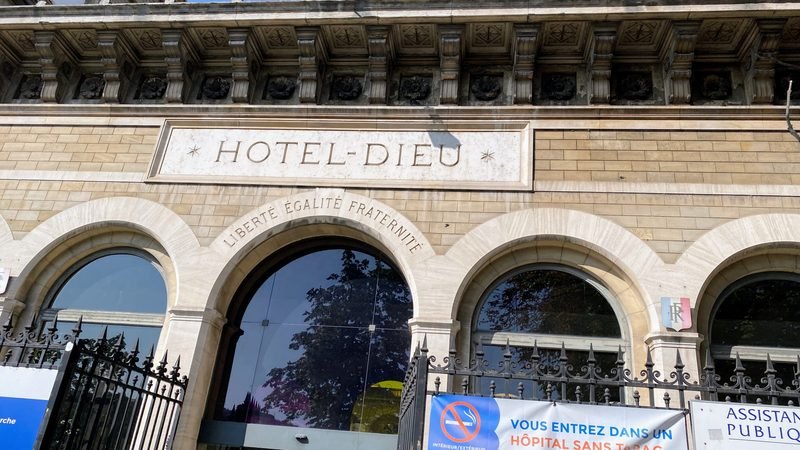
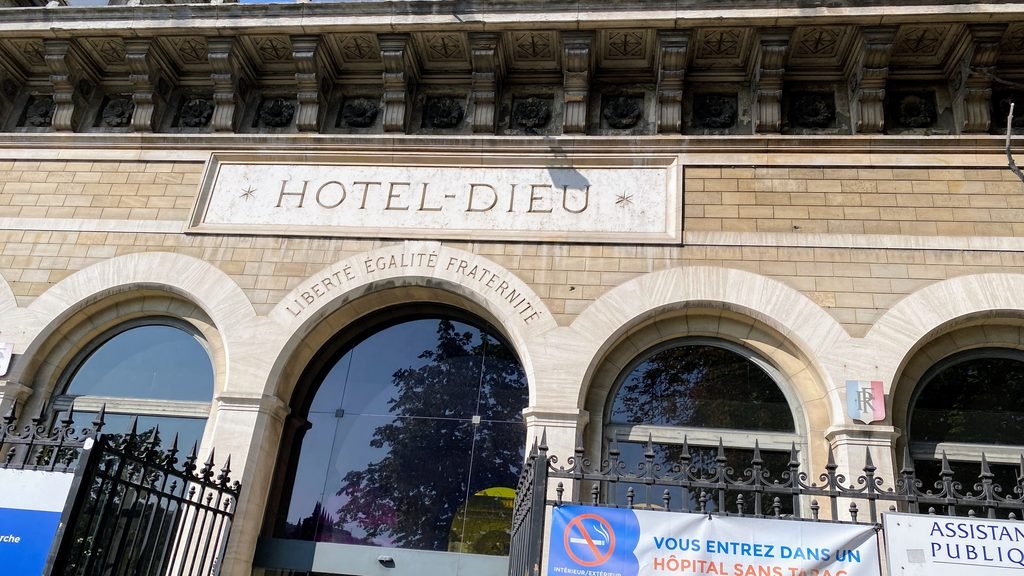
A wall beneath a hospital is drawing archaeologists back to one of the oldest questions about Paris: where exactly was the Gallic town described by Julius Caesar? A stone-and-timber structure uncovered at Hôtel-Dieu, on the Île de la Cité, may be part of that settlement’s fortifications. France’s Ministry of Culture announced the discovery on September 23, 2026, following its excavation during the summer. [1]
The Gallic wall discovered in Paris is a substantial new piece of evidence. Its identification as a rampart of Lutetia remains a hypothesis, however, and the fire that damaged it has not been securely tied to 52 BC. The distinction matters: finding an ancient structure and identifying the historical event that destroyed it are separate tasks. [1]
What archaeologists found at Hôtel-Dieu
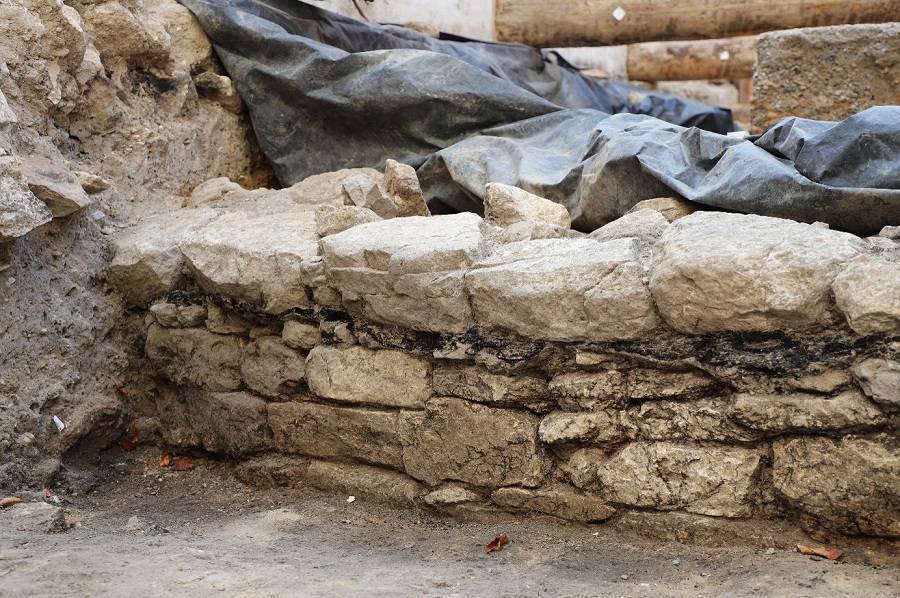
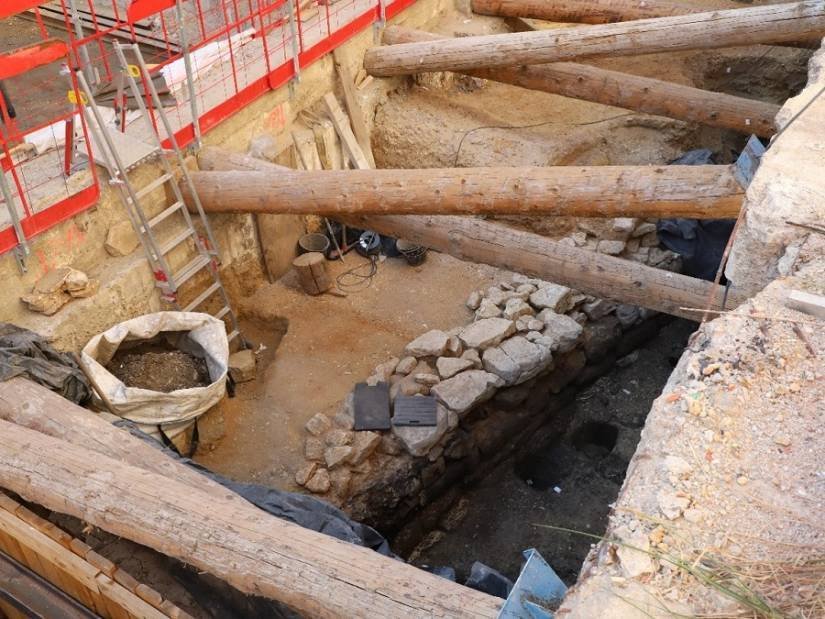
The remains extend for approximately 20 metres. Stone blocks combined with timber suggest a building tradition associated with Gallic fortifications of the late Iron Age. Behind the wall lies an artificial platform of sand and gravel, surviving to roughly two metres thick. The regional heritage authority, DRAC Île-de-France, also reports fire damage, charred seeds, a burned timber building immediately in front of the wall and a Gallic spearhead at its foot. [2]
David Couturier, of the City of Paris’s archaeology service, leads the excavation with the participation of Inrap, France’s national preventive archaeology institute. Work began in February 2026 ahead of the hospital’s redevelopment. A city report published before the discovery described an investigation covering 1,250 square metres across two courtyards. [2] [3]
That earlier account helps establish the sequence. The dig was already under way months before the wall became public news; September 23 was the announcement date, not the day a previously unknown structure suddenly appeared. The hospital excavation is also distinct from the separate 2026 work on the nearby Notre-Dame forecourt. [1] [3]
Why the location of Gallic Lutetia matters
Lutetia is familiar as the ancient name associated with Paris. Locating the earlier settlement of the Parisii, a Gallic people, has been a more difficult archaeological problem. The traditional identification with the Île de la Cité depended heavily on Caesar’s description of an island settlement and the continuity of the name. [4]
An older Ministry of Culture account explains why that identification was debated. Evidence for a securely identified Gallic fortified settlement on the island was lacking, while the ancient river landscape did not precisely match today’s. The island’s outline was reshaped by later construction, including Roman quays. Reading a modern map back into Caesar’s narrative therefore carried risks. [4]
The Hôtel-Dieu wall gives researchers a physical structure to test against that historical question. If its interpretation holds, it could make the connection between the written settlement and the modern island considerably stronger. Even then, one stretch of wall would not, by itself, reveal the entire town’s boundaries, population or street plan.

What Caesar actually says about the fire
In Book VII of The Gallic War, Caesar describes Lutetia as a town of the Parisii on an island in the Seine. The Roman commander approaching it was his lieutenant Titus Labienus. In chapter 58, Caesar says the opposing Gauls ordered Lutetia burned and its bridges destroyed as Labienus advanced. [5]
That account is more specific than a headline saying Caesar burned down a Celtic city. It attributes the burning to the Gallic side, and it places Labienus in command of the Roman operation. It is also a Roman account of the campaign, not an independent record of the excavated wall. Linking this particular fire damage to that narrative requires archaeological evidence as well as a matching story. [5]
Why the dating does not yet establish 52 BC
The Ministry’s initial radiocarbon results for wooden elements span 200–10 BC. The City of Paris’s September 23 report gives a different endpoint, describing a range of 200–30 BC. The public accounts do not explain that discrepancy. Both intervals include 52 BC, but neither singles it out. [1] [6]
There is a further distinction between dating wood and dating a fire. As the Oxford Radiocarbon Accelerator Unit explains, a radiocarbon measurement relates to when the sampled organism was alive. For wood, it dates the growth of the sampled tree ring. It does not automatically date the moment a beam was installed or burned. [7]
A tree can grow, be felled, become building timber and burn at different times. Researchers must relate a sample to the event they want to date. This is a general dating principle, not evidence that the Paris samples are faulty. It explains why a broad result consistent with Caesar’s campaign is a starting point rather than a precise historical identification. [7]
A rampart is the leading interpretation, with questions open
The next investigation must establish how the wall was used and how it related to the raised ground behind it. The Ministry explicitly leaves open whether its role was exclusively defensive or also involved retaining that ground. Construction and destruction dates likewise need refining. [1]
These questions affect the historical picture. A wall that enclosed a settlement would tell a different story from one whose principal purpose was supporting an embankment, although a structure could serve both functions. Its position within the sequence of occupation is therefore as important as its appearance.
The City’s account identifies further buildings, houses, storage structures, pits and pottery as evidence researchers hope to find. Such discoveries could strengthen the proposed identification or challenge it. That possibility of revision is part of testing the Lutetia hypothesis, not a reason to dismiss the discovery. [6]
What will happen to the fragile remains
The Ministry’s announced plans include detailed digital recording, careful dismantling and a cast for a partial reconstruction that could incorporate original facing stones. A future museum display in Paris is envisaged. These were plans at the time of the announcement, not completed work or an exhibition already open to visitors. [1]
Any eventual reconstruction will need to distinguish surviving ancient material from newly made elements. A digital model or museum installation may help people understand the structure, but its visual completeness should not be mistaken for the completeness of the excavated evidence.
A significant discovery with a testable conclusion
The strongest story is already compelling: an excavation in central Paris has produced a substantial candidate for a structure long sought through texts and archaeology. What remains to be demonstrated is precisely how it fits Gallic Lutetia and whether its destruction belongs to the events of 52 BC. The next decisive step will be the results of that investigation.
Explore Ancient Knowledge for more archaeology reporting that follows the evidence from discovery to interpretation.
Sources and further reading
- French Ministry of Culture. Découverte archéologique : le rempart de Lutèce Gauloise retrouvé sous l’Hôtel Dieu AP-HP à Paris. 23 September 2026. Read source
- DRAC Île-de-France, French Ministry of Culture. Découverte archéologique majeure à Paris : le rempart de la Lutèce gauloise mis au jour. 23 September 2026. Read source
- City of Paris. Fouilles archéologiques sur l’île de la Cité : plus de 2 000 ans d’histoire sous nos pieds ! Updated 3 June 2026. Read source
- French Ministry of Culture, Paris antique. La Lutèce gauloise. Undated background account reflecting the debate before the September 2026 announcement. Read source
- Julius Caesar; LacusCurtius, hosted by the University of Chicago. The Gallic War, Book VII, chapters 57–58. Loeb Classical Library edition, 1917. Ancient literary source, read as a Roman account of the campaign. Read source
- City of Paris. Cette découverte archéologique exceptionnelle pourrait changer l’histoire de Paris. Updated 23 September 2026. Read source
- Oxford Radiocarbon Accelerator Unit, University of Oxford. Radiocarbon Dating. General explanation of what organic samples date; not a report on the Paris samples. Read source