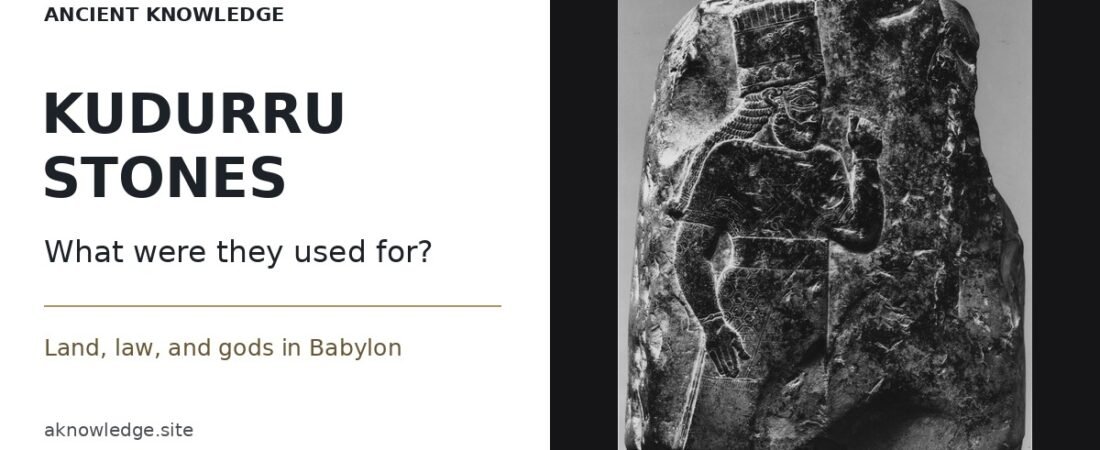
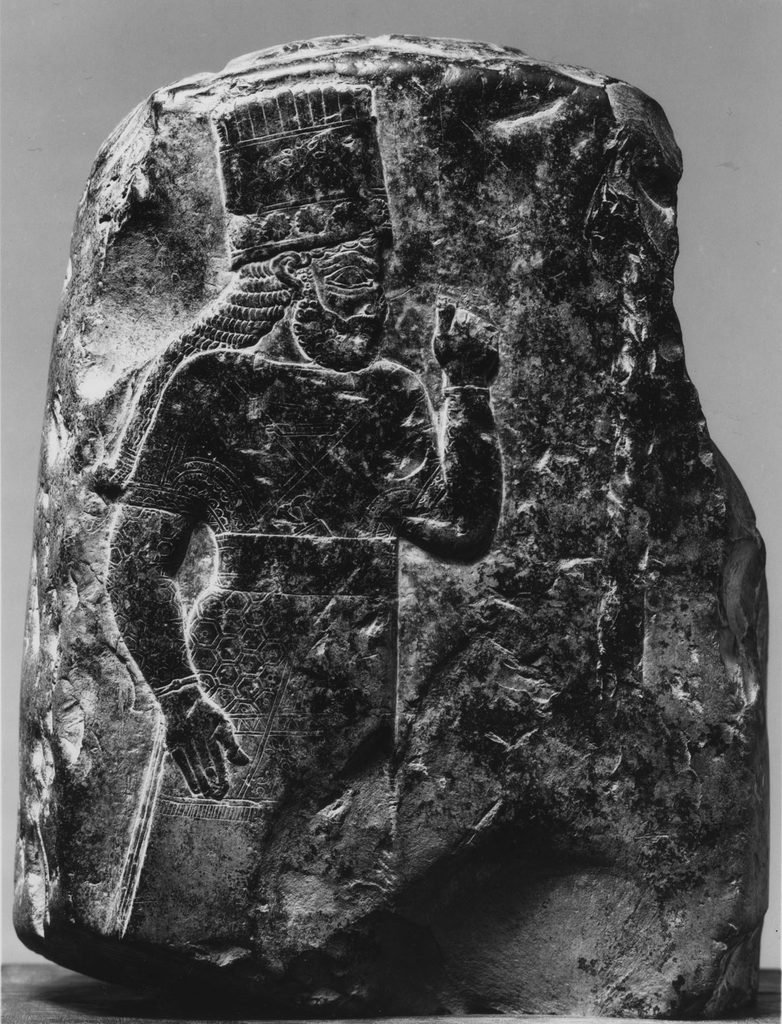

A Babylonian king raises one hand before his face. His robe is patterned, his crown tall, and the stone beneath his image carries a damaged inscription. This small monument in the Walters Art Museum belongs to the group commonly called kudurrus, or Babylonian boundary stones. [1]
What were kudurru stones used for? They recorded and protected claims to land and other rights, combining written accounts with appeals to divine authority. Some commemorated royal gifts; others preserved purchases or family arrangements. Their familiar name needs care: evidence for temple settings complicates the picture of a stone simply marking the edge of a field. Reading them means bringing the inscription, imagery, and findspot together. [2] [6] [8]
What a kudurru recorded
Kudurrus belong to the history of Babylonia, in what is now Iraq. They are closely associated with the Kassite period of the second millennium BC, but the tradition continued under later rulers. The Walters example is dated by the museum to 1099–1082 BC, after the Kassite dynasty had ended. [1] [4]
A land transaction involved several separate questions. What property was being transferred? Who received it? Who authorized or witnessed the arrangement? Did it carry exemptions or other privileges? A monument could preserve answers that a line drawn across a field could never supply. [2] [5]
The French Ministry of Culture describes these stone texts as copies of contracts previously written on clay tablets. It also stresses that only some property transactions received this treatment. Committing an arrangement to stone gave it an additional, religiously protected form of recognition. The surviving objects therefore represent a selected body of claims, not a complete register of Babylonian landownership. [2]
Why the boundary stone label can mislead
The Akkadian word kudurru is connected with boundaries. Early scholars combined that meaning with the inscriptions’ descriptions of land and inferred that the objects stood around the properties concerned. Assyriologist Kathryn Slanski challenged this classification in a 2000 study, drawing attention to the monuments’ own terminology and archaeological contexts. [3]
The inscriptions generally call the objects naru, meaning a monument or stele. Some texts describe placement before the gods; excavated examples also come from temple settings. Slanski argues that their function should be understood through this monumental and religious context. The Ministry of Culture likewise considers temple deposition likely, while allowing that placement in a field may sometimes have occurred. [2] [3]
The Walters museum identifies Esagila, Marduk’s sanctuary at Babylon, as the findspot of its example. That is useful evidence for this particular object. It does not establish an identical original setting for every surviving kudurru. The safest starting point is to treat each as a record of rights whose location must be investigated. [1]
Following a land transfer through the inscription
One British Museum kudurru, dated around 1125–1100 BC, records a grant by Eanna-shum-iddina, governor of the Sealand, to Gula-eresh. Its text describes the land’s boundaries, names the surveyor Amurru-bel-zeri, and identifies two officials involved in completing the transfer. These details connect a particular piece of land with a named recipient and an administrative process. [5]
Another example records a purchase. Marduk-nasir, an officer of King Marduk-nadin-ahhe, acquired land from Amel-Enlil. The British Museum’s account lists payment in goods, including a chariot, two donkeys, an ox, grain, oil, and clothing. Their combined value was expressed as 1,700 shekels of silver. [6]
That distinction matters when reading an ancient price. A value stated in silver does not necessarily mean the purchaser handed over that amount of silver. In this transaction, the listed goods supplied the payment. The stone preserves both the change in landholding and a glimpse of how the parties valued what they exchanged. [6]
Comparing the two cases also prevents a misleading generalization. A governor’s grant and an officer’s purchase produced related kinds of monuments, but they describe different routes to acquiring land. The word kudurru tells us the kind of object; its inscription tells us what happened. [5] [6]

Why gods and curses appear beside land records
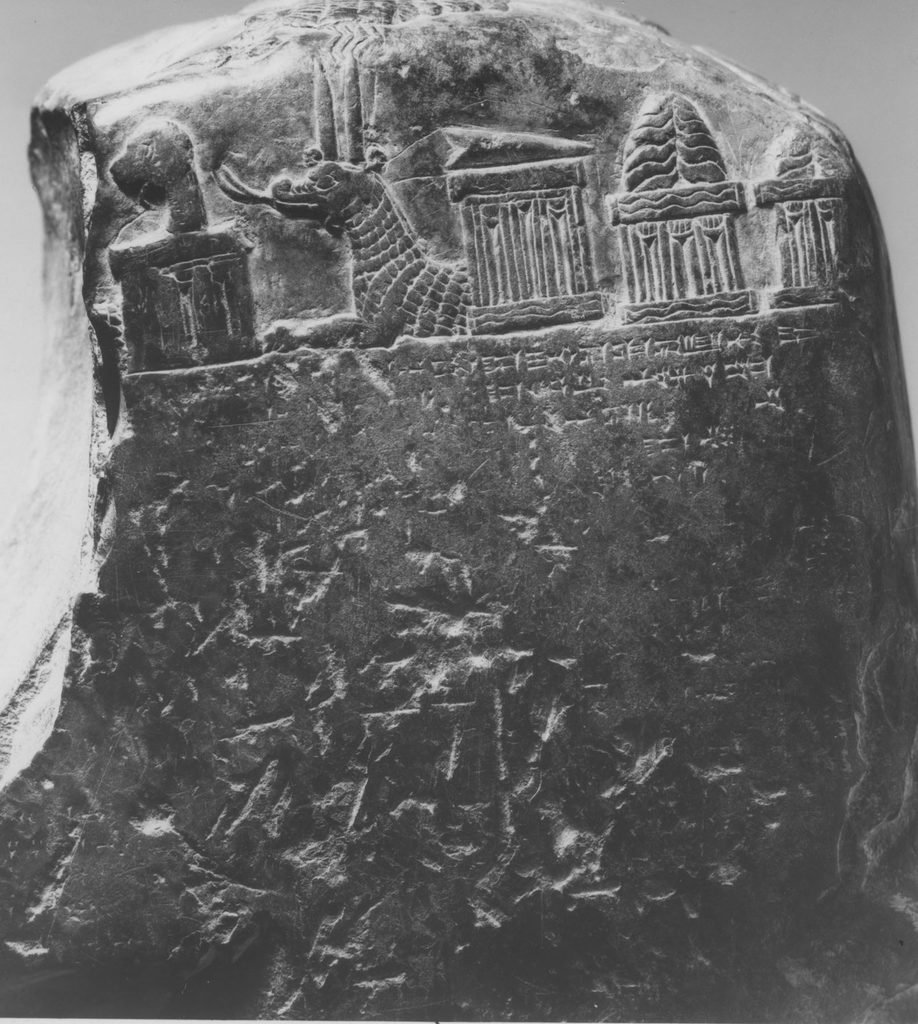
On the Sealand grant, the British Museum identifies a solar disc with Shamash, a crescent with Sin, and an eight-pointed star with Ishtar. These are representations of divine powers associated with the monument. The inscription ends by invoking curses against anyone who removes, disregards, or destroys it. [5]
The imagery and the written warnings address the same vulnerability: an arrangement might be challenged after its participants were gone. Invoking divine punishment sought to protect both the record and the rights it commemorated. This explains the intended role of the curses; it does not demonstrate that they prevented later interference. [3]
A kudurru in the Louvre makes the relationship between people and gods especially visible. King Meli-Shipak presents his daughter before the seated goddess Nanaya. Above the scene are the star of Ishtar, the sun of Shamash, and Sin’s lunar crescent. According to the museum, the accompanying text commemorates a gift of land to the king’s daughter, Hunnubat-Nannaya, as well as irrigation-canal repairs. [7]
Here the scene and the inscription can be read together. The text identifies a transaction, while the carved encounter gives it a religious setting. A photograph alone can show the figures, but the museum’s reading of the inscription supplies the people and event behind them. [7]
Land could also pass through a family gift
The Caillou Michaux offers another case involving a woman, outside a royal grant. The Ministry of Culture explains its inscription as a gift of farmland from Nirah-nasir to his daughter Dur-Sharrukinaia’itu. The arrangement was made privately, without royal intervention. [8]
The ministry distinguishes this marriage gift, called mulugu, from an ordinary dowry managed by a husband. Its interpretation gives the daughter responsibility for administering the land, with the option of delegating that task to her father-in-law. His oath commits him not to appropriate it. [8]
This specific arrangement is evidence for the woman’s rights in that transaction. It cannot by itself tell us how freely every Babylonian woman could acquire or control property. Its value lies in the unusually concrete relationship it records between a named recipient, her family, and a defined holding. [8]
A discovery site may be far from the original land
Some Babylonian kudurrus were recovered at Susa, in present-day Iran. Louvre-Lens explains that its example, SB 32, reached Susa among the spoils taken by the Elamite king Shutruk-Nakhunte. The monument itself records grants by the Babylonian king Meli-Shipak to administrators. [9]
Its journey matters. Finding a land record at Susa does not mean the land described lay beside the excavation. An object can preserve one location in its text and another in its later history. Archaeologists must distinguish where it was made, where it originally stood, and where it eventually entered the ground. [9]
Reading the surviving evidence
Translations also have histories. LMU Munich’s Royal Inscriptions of the Kassites and Kudurrus project notes that the British Museum’s major English publication of 1912 is outdated and identifies Susanne Paulus’s 2014 edition as a later treatment of the inscriptions. A readable old translation should therefore be checked against subsequent scholarship before a difficult passage becomes a confident claim. [4]
For the reader, a useful habit is to ask what each kind of evidence establishes. The inscription may identify a gift or sale. The relief may identify the ruler or divine protectors. The excavation record may establish a setting, or reveal that the object had moved. Gaps in one cannot automatically be filled by another.
Kudurrus preserve efforts to make rights endure beyond a single transaction. Their names, payments, and family arrangements bring those efforts into focus. When you next encounter one in a museum catalogue, look past the boundary-stone label: find the recipient, identify the transaction, and check what is actually known about the stone’s original setting.
Sources and further reading
[1] The Walters Art Museum. Boundary Stone. Object 21.10. Read source
[2] French Ministry of Culture, Orient cunéiforme. Example of a kudurru. Read source
[3] Kathryn E. Slanski. Classification, Historiography and Monumental Authority: The Babylonian Entitlement Narûs (Kudurrus). 2000. Journal of Cuneiform Studies 52, pp. 95–114; discussion used here: pp. 95–98. Read source
[4] LMU Munich. Royal Inscriptions of the Kassites and Kudurrus (RIKK). Read source
[5] British Museum, via Google Arts & Culture. Boundary stone (kudurru), grant to Gula-eresh. Object 1907,1014.1. Read source
[6] British Museum, via Google Arts & Culture. Boundary stone (kudurru), purchase by Marduk-nasir. Object 1863,0826.1. Read source
[7] Musée du Louvre. Kudurru du roi Melishipak II. Catalogue updated 29 May 2026. Object SB 23. Read source
[8] French Ministry of Culture, Orient cunéiforme. What does the Caillou Michaux tell us? Read source
[9] Louvre-Lens. Stele (Kudurru). Object SB 32. Read source
Sources and image rights checked on 27 September 2026.