
Clay tablets can survive where almost everything else disappears.
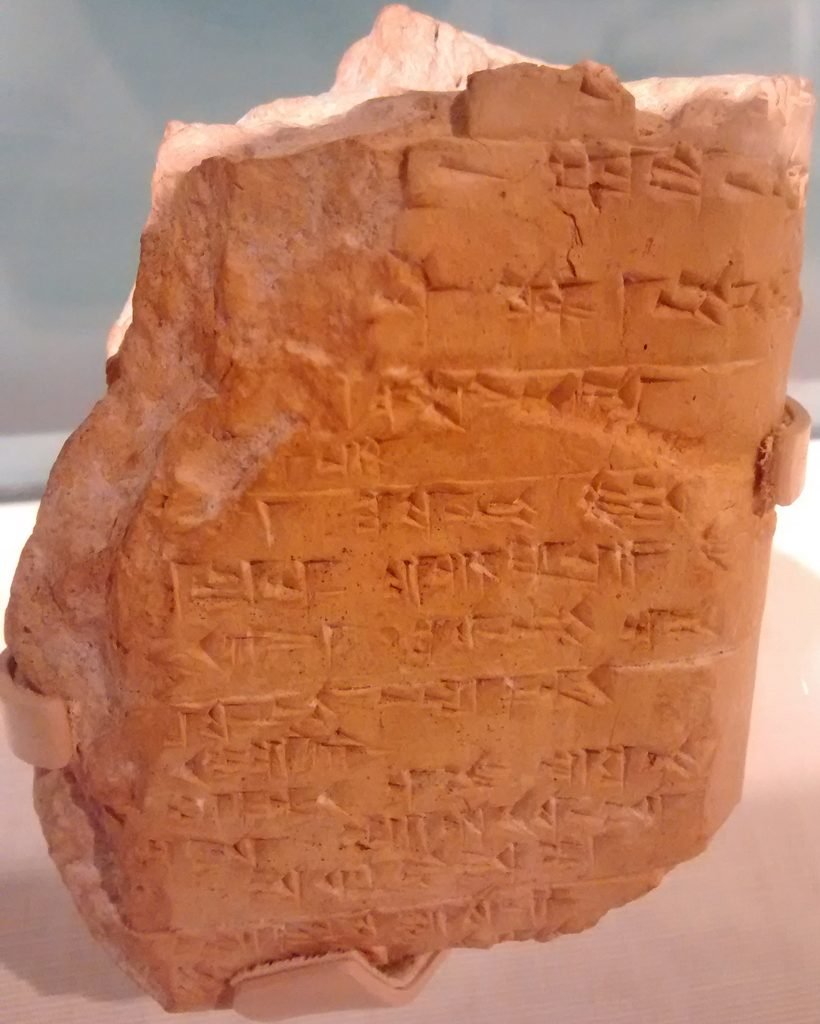
At Kayalıpınar in central Türkiye, archaeologists have now uncovered a remarkable group of cuneiform texts that preserves fragments of Hittite state life from approximately 3,400 years ago.
The settlement is identified with ancient Šamuḫa, an important Hittite city known from written sources.
During the 2026 excavation season, researchers recovered 131 cuneiform tablets and fragments dating to the reign of King Tudhaliya II. Combined with 53 pieces found in the same area during the previous season, the archive now totals 184 tablets and fragments.
Written in Hittite and Hurrian, the texts deal with far more than routine administration.
They preserve evidence of a high-fever epidemic, concern for sick members of the royal family, military appeals from western Anatolia, religious rituals, prayers and detailed records of bird divination.
The discovery does not give us a complete history of one moment in the Hittite Empire.
But it brings unusually direct voices from a royal administration back into view.
A Royal Archive Emerges at Ancient Šamuḫa
Kayalıpınar lies in the Yıldızeli district of Sivas Province.
The archaeological settlement has been identified with Šamuḫa, a city mentioned in Old Assyrian and Hittite sources.
Excavations at Kayalıpınar began in 2005. Work resumed under a new excavation program in 2021 led by archaeologist Çiğdem Maner of Koç University.
The site had already demonstrated its importance through administrative buildings, palace architecture, seals and written material.
It is one of the relatively small number of sites in Anatolia that has produced both Assyrian and Hittite written tablets.
The latest archive adds another level of significance.
Instead of an isolated text, researchers are dealing with a connected body of documents associated with royal administration during the reign of Tudhaliya II.
According to the excavation team, it is the most extensive Hittite-language archive discovered in the twenty-first century.
That description should be understood as the team’s current assessment rather than a permanent archaeological record.
Future discoveries can always change such rankings.
131 Finds in 2026, 184 Across Two Seasons
The scale of the discovery became clear only when the 2025 and 2026 material was considered together.
Fifty-three tablets and fragments recovered in 2025 are thought to belong to the same archive.
Another 131 pieces were uncovered in 2026.
That brings the known archive to 184 pieces.
The texts fall into several categories, including letters, rituals, prayers and divinatory records.
This variety matters.
A royal archive is valuable not simply because it preserves names and dates, but because different documents reveal different parts of how a state functioned.
Letters can record military emergencies.
Ritual texts reveal religious practices.
Divination records show how rulers and officials sought guidance when faced with uncertainty.
And in this archive, several texts appear to preserve the human consequences of a health crisis.
An Epidemic Reaches the Royal World
Some of the most striking tablets describe an illness characterized by high fever that spread from city to city.
The records indicate particular concern for children and infants.
Young princes and princesses, along with the children of high-ranking Hittite officials, appear in divinatory inquiries concerning their health.
The documents therefore preserve more than evidence that illness existed.
They reveal anxiety within elite households and the methods used to respond when the outcome of sickness could not be predicted.
There is an important scientific limit here.
The tablets describe symptoms and circumstances from an ancient cultural perspective.
They do not provide enough medical evidence to identify a modern disease.
Calling the outbreak plague, influenza or another specific infection would go beyond what the current evidence establishes.
For now, the safest description is the one supported by the texts: a spreading illness associated with high fever.

A Princess’s Illness and Death
One sequence of records is particularly personal.
The archive refers to an infant princess who was still being nursed when she became ill.
Divination was used in an attempt to understand her future.
Another document records that she later died and that a funerary ritual was performed for her.
A further tablet reportedly states that the princess became ill in a city called Ziulila.
The location of Ziulila has not yet been securely identified.
These are administrative and ritual records, not a modern biography.
They cannot tell us exactly what the child experienced, what pathogen caused her illness or how long she was sick.
But together they reveal something rarely preserved in monumental architecture.
Behind the institutions of the Hittite state were families confronting uncertainty, illness and death.
Generals Warn the King From Western Anatolia
The archive also preserves evidence of military danger.
One letter was sent to the Hittite king at Šamuḫa by generals operating in western Anatolia.
According to the newly announced interpretation, the commanders reported that Hittite territory was surrounded by enemies.
They requested soldiers, horses and chariots.
The warning became even more urgent.
The letter stated that without the requested support, the situation could deteriorate to the point that the Hittite army might be destroyed.
The commanders also made clear that they did not want responsibility for the consequences if reinforcements were not sent.
It is a remarkable piece of state communication.
Instead of a later royal inscription celebrating victory, the document appears to preserve uncertainty while a crisis was still unfolding.
That difference is important.
Official histories often emphasize successful rulers and completed campaigns.
A letter written during danger can reveal fear, logistical pressure and disagreement before anyone knew the outcome.
Bird Divination Recorded Almost Like a Travel Log
Some of the archive’s most unusual information concerns bird divination.
Divination played an important role in Hittite decision-making.
The behavior of animals, dreams and other signs could be interpreted as evidence of divine approval or warning.
One newly reported tablet records bird diviners traveling outside Šamuḫa.
The document reportedly lists places where they stayed, routes they followed and birds they observed.
The structure has been compared to a travel diary.
These records should not be described as ornithological science in the modern sense.
The birds were being observed within a religious system of divination.
What makes the tablets valuable is that they preserve the procedures behind that system.
They may help scholars reconstruct not only which birds mattered, but how observations were organized and interpreted.
For historians of religion, administration and language, that procedural detail can be as important as the omen itself.
Why Šamuḫa Mattered to the Hittite State
Šamuḫa was not an isolated provincial village.
Written sources and archaeology indicate that it occupied an important position within the Hittite world.
The site at Kayalıpınar contains evidence spanning several periods, including the Assyrian Colony Age, the Hittite period and later occupations.
Administrative architecture and written records point to its political importance.
The newly discovered archive strengthens that picture.
A place receiving royal correspondence, military requests and specialized divinatory records was part of an active network connecting court, officials, soldiers and religious specialists.
The documents also remind us that the Hittite state was not simply its capital at Hattusa.
Its power depended on a network of strategically important cities where information, resources and decisions moved between regions.
What the Archive Can—and Cannot—Tell Us
The announcement is significant, but the archive is still being studied.
Translations and interpretations can become more precise as individual fragments are joined, copied and published in full.
The texts support the existence of a high-fever epidemic, but they do not identify a specific pathogen.
They record the death of an infant princess, but they do not provide a complete account of her life.
The military letter documents an emergency, but one document cannot reconstruct an entire war.
The bird-divination texts reveal procedures and journeys, yet their full religious and administrative context still requires specialist study.
Even the description of the collection as the most extensive Hittite-language archive discovered in the twenty-first century comes from the excavation team’s current assessment.
None of these limits make the discovery less important.
They make it possible to describe what has actually been found without turning preliminary evidence into certainty.
A State Remembered Through Clay
Empires are often remembered through walls, palaces, weapons and royal monuments.
The archive from Šamuḫa preserves another kind of history.
An infant becomes ill.
Officials search for answers.
Generals ask urgently for reinforcements.
Diviners travel between cities watching birds.
Scribes record prayers, rituals and decisions on wet clay.
Then the state that produced those documents disappeared.
Approximately 3,400 years later, the clay remained.
The importance of the Kayalıpınar archive lies not simply in the number 184.
It lies in the range of experiences preserved across those fragments.
Together, they bring us closer to the machinery of Hittite government—and to the uncertainty experienced by the people operating it.
Sources and Further Reading
- Republic of Türkiye Ministry of Culture and Tourism. “The State Memory of the Hittites Comes to Light After 3,400 Years.” October 8, 2026. Official Ministry announcement — 8 October 2026
- Sivas Provincial Directorate of Culture and Tourism. “Šamuḫa Hittite City.” Official archaeological-site overview. Official Šamuḫa archaeological-site page
- HeritageDaily. “184 Cuneiform Tablets Discovered in Hittite Royal Archive.” October 8, 2026. HeritageDaily coverage — 8 October 2026